Spotting patterns is one of the earliest maths and thinking skills. It helps children predict what comes next, understand number sequences, read rhythms in language and solve problems. These pattern recognition activities for kids start with simple two-part patterns and build up gradually, with ideas for children with special needs at every level.
Table of Contents
Why patterns matter
Patterns are everywhere: in numbers (2, 4, 6, 8), in words (cat, hat, mat), in music and in daily routines. Children who recognise patterns can make predictions, which makes the world feel more organised and easier to understand. Pattern work also builds:
- Early maths: counting in steps, odd and even numbers, and later times tables.
- Logic and problem-solving: working out a rule and applying it.
- Attention and visual memory: looking carefully and remembering the sequence.
- Language and reading: rhymes and repeated phrases in stories.
Many autistic children are especially strong at spotting patterns, so pattern games can be a confidence-building place to start.
Level 1: Copy a pattern
1. Copy my blocks
Make a short line of two colours (red, blue, red, blue). Your child copies it underneath with their own blocks. Copying comes before continuing.
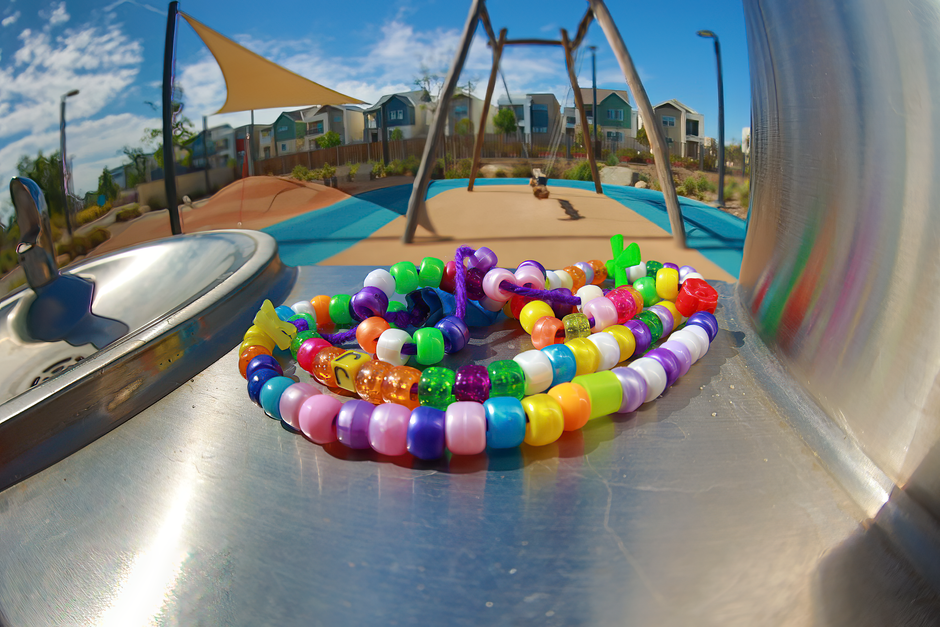
2. Bead strings
Thread beads in a simple pattern and ask your child to copy it on their own string. Chunky beads help children with fine-motor difficulties.
3. Clap and stamp
Do a movement pattern (clap, stamp, clap, stamp) and your child copies it. Great for children who learn through movement.
Level 2: Continue a pattern
4. What comes next?
Lay out a pattern (apple, banana, apple, banana) and stop. What comes next? Start with two-part patterns and only move on when your child is confident.
5. Pattern Game
The free BrightMinds Pattern Game shows a sequence and asks what comes next, with big pictures and no timer. It is a calm way to practise on screen.
6. Snack patterns
Make a pattern with snacks (cracker, cheese, cracker, cheese) and let your child continue it, then eat it.
7. Peg patterns
Clip coloured pegs around a paper plate in a pattern. This combines patterns with fine-motor practice.
Level 3: More complex patterns
8. Three-part patterns
Move to patterns like red, blue, yellow, red, blue, yellow, or AAB patterns like circle, circle, square.
9. Growing patterns
Build towers of one block, two blocks, three blocks. What comes next? This links patterns to counting.
10. Number patterns
Count in twos with a number line, or find the missing number in 1, 2, _, 4. Our numbers quiz offers extra calm practice with numbers.
11. Find the mistake
Make a pattern with one deliberate mistake. Can your child spot and fix it? This is a great challenge for children who find continuing patterns easy.
12. Make your own
Ask your child to create a pattern for you to continue. Making a pattern shows real understanding of the rule.
Patterns in everyday life
- Spot patterns on clothes, tiles, fences and wrapping paper.
- Talk about the pattern of the week (school days and weekend days).
- Sing songs with repeating lines and actions.
- Read books with repeated phrases and pause for your child to say the next line.
Tips for different needs
- Autism: use favourite objects or characters, and keep the activity format the same each time.
- ADHD: use movement patterns and keep rounds short.
- Developmental delay: stay at the copying stage as long as needed; use very different colours and shapes.
- Physical disabilities: your child can point or look at the answer while you place the pieces.
- Dyscalculia: patterns with real objects are a gentle way into number sequences.
For more early maths ideas, read our guide to counting games for kids who learn differently and teaching numbers to a child with special needs.
Free to play, no sign-up
Practise this with a free BrightMinds game
- Pattern Game: Spot what comes next in a sequence. Gentle logic practice with no time pressure.
- Numbers Quiz: Counting and number recognition with pictures, one question at a time.
Frequently Asked Questions
Why are patterns important for young children?
Patterns build prediction, early maths, logic and attention, and help children see order in the world around them.
What is the first pattern to teach?
A simple two-part colour pattern (red, blue, red, blue), copied before continued.
How do I make patterns harder?
Move to three-part patterns, growing patterns, number sequences and finding a mistake in a pattern.
Sources and further reading
- NRICH (University of Cambridge): free early years and primary maths activities, including patterns.
- BBC Bitesize Primary: free maths resources.


