For parents of children who learn differently
You know your child is capable. Finding what works is the hard part.
BrightMinds is a free library of adaptive quizzes, brain games and plain-English guides for children aged 3–14 with autism, ADHD, dyslexia and developmental delay. Written by parents and SEN teachers — no jargon, no time pressure, no cost.
Your path this week
Four steps most families work through
Pick up wherever you are. Each step takes a few minutes, not an evening.
Understand the need
Short guides on what a diagnosis actually means day to day.
Choose a hub →Try a 5-minute session
No account. Your child plays, you watch what clicks.
Pick a subject →Build the home setup
The physical tools that make practice stick between sessions.
See the toolkit →Start here
What are you working on right now?
Each hub collects the guides, quiz settings and games that families with the same need found most useful.
Autism
Predictable layouts, calm mode, reducing overwhelm, and building routine around learning.
Browse guides →ADHD
Short sessions, movement breaks, and keeping focus without a fight at the table.
Browse guides →Dyslexia
Phonics practice, dyslexia-friendly fonts, read-aloud, and rebuilding reading confidence.
Browse guides →Developmental delay
Matching difficulty to ability rather than age, and tracking small, real progress.
Browse guides →Home learning toolkit
The physical tools that pair well with screen practice
Screen practice works better alongside something a child can hold. These are the items families in our newsletter reported still using after three months.
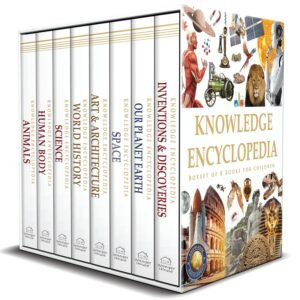
Knowledge Encyclopedia — 8-Book Boxset for Children
Check price on Amazon| Also recommended | Best for | Ages | Link |
|---|---|---|---|
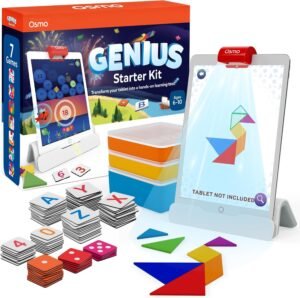 Osmo Genius Starter Kit for iPad
|
Check price | ||
 National Geographic Mega Science Lab — 75-Experiment Kit
|
Check price | ||
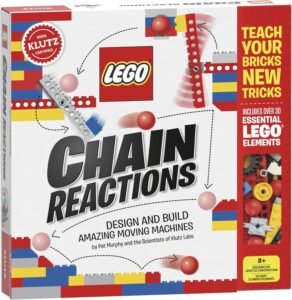 LEGO Chain Reactions by Klutz
|
Check price |
Hand the device over
Six subjects and four brain games, free and account-free
Large tap targets, read-aloud on every question, no timers and no red crosses. Your child enters a first name and starts.
Or browse by level
Match the level to ability, not age
If your child's developmental age differs from their birthday, start one level lower. You can change it any time from the dashboard.
For parents and teachers
Progress you can actually show someone
Sessions turn into a simple record of what your child can do — useful at an EHCP meeting, an IEP review, or a paediatrician appointment.
- Stars and mastery per subject, week by week
- Session history with time spent and level
- Next-step suggestions based on weak areas
- Override difficulty to match ability, not age
Latest from the blog
Written by parents and SEN teachers

How to Keep a Child with ADHD Focused During Learning
Practical, proven ways to keep ADHD child focused learning at home or school — environment tips, routines, game-based…

What Is Global Developmental Delay and How Can You Help
Finding the right global developmental delay help can feel overwhelming when you are first told your child has…

Free Classroom Activities for Special Needs Students
classroom activities special needs students: free, inclusive ideas for autism, ADHD, dyslexia and Down Syndrome, for teachers and…
From families and classrooms
What changed for them
“My son has autism and usually refuses anything screen-based. He asked to do BrightMinds again the next day — that has never happened before.”
“I use it with my Year 3 class. No wrong-answer penalties is a game-changer for children with anxiety.”
“The big buttons and read-aloud mean my daughter can do it completely independently. That is the part I did not expect.”
Questions from parents
Frequently asked questions
Is BrightMinds suitable for children with autism?
Yes. BrightMinds was designed from the ground up with autism-friendly principles: no time pressure, no penalty for wrong answers, a calm low-stimulation colour palette, large tap targets, text-to-speech on every question, and a consistent friendly owl mascot. Children with ASD can play independently without adult support.
Is BrightMinds free to use?
Yes. Every quiz and brain game is free to play, and no account is required. We are committed to keeping quality learning accessible to every special needs child, regardless of family income.
Does my child need to create an account to play?
No account is ever required to play. Children enter their first name and age and start playing instantly — no email, no sign-up, no password. Parents can optionally create a free account to track their child's progress over time.
What age groups and conditions does BrightMinds support?
BrightMinds supports children aged 3–14 across four adaptive difficulty levels: Beginner (ages 3–5), Elementary (ages 6–8), Intermediate (ages 9–11) and Advanced (ages 12–14). It is used by children with autism, ADHD, dyslexia, Down Syndrome, cerebral palsy, speech delay, global developmental delay, and other learning differences.
Can teachers use BrightMinds in a special needs classroom?
Absolutely. BrightMinds works on any device with a browser — tablets, Chromebooks, iPads, and interactive whiteboards. The Parent/Teacher dashboard lets educators review individual session results, track progress across subjects, and adjust difficulty level. No installation or IT setup required.
How is difficulty adapted for children with learning disabilities?
BrightMinds automatically sets the difficulty level based on the child's age — but parents can override this in the dashboard to match their child's actual ability rather than their age. This is especially important for children whose developmental age differs from their chronological age.
Does BrightMinds work on tablets and mobile phones?
Yes. BrightMinds is fully optimised for touch screens. All tap targets are large, the layout adapts to any screen size, and quizzes work in both portrait and landscape orientation. It runs in any modern browser with no app download required.
What subjects are covered?
BrightMinds currently covers six subjects: Numbers (counting and basic maths), Letters (alphabet and phonics), Animals (recognition and facts), Colours (identification and naming), Shapes (2D shapes and properties), and Emotions (identifying and naming feelings). Each subject has questions across all four difficulty levels.
One email a week. One thing to try.
Practical strategies from SEN teachers, plus whatever we have added to the library. Written for five minutes of reading, not ten.
No spam, no sharing your address, unsubscribe in one click.