
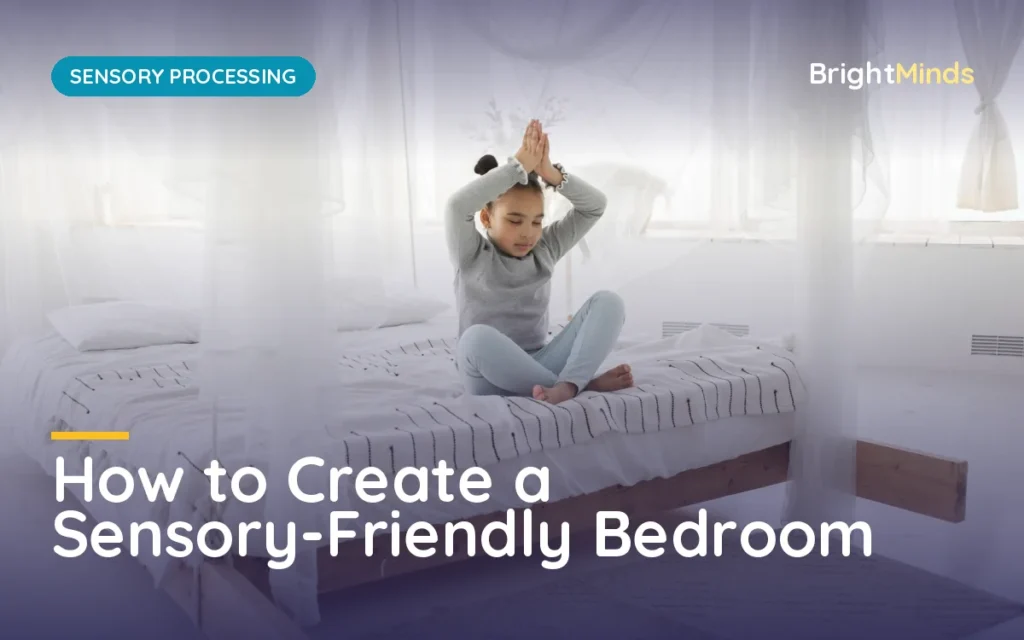
A bedroom is where children sleep, rest and recover from busy days. For children with sensory sensitivities, a cluttered, bright or noisy room can make it harder to relax. A few changes can create a sensory-friendly bedroom that feels calm and safe. Most of them cost little or nothing.
Table of Contents
Start with your child
Notice what your child finds calming and what bothers them. Some children love soft fabrics and dim light; others want a cool, bare room. Ask them, or watch where they choose to relax around the house. Our guide to sensory processing differences explains common patterns.

Lighting
- Blackout curtains or blinds for sleep.
- Warm, dimmable lamps instead of bright overhead lights.
- A night light if your child dislikes complete darkness.
- Avoid flickering bulbs and very bright or flashing lights.
Sound
- Rugs, curtains and soft furnishings absorb sound and reduce echo.
- A white-noise machine or fan can mask household noise.
- Choose the quietest room in the house for bedtime, if you can.
Colour and visual calm
- Soft, muted colours on walls, such as pale blue, green or warm neutrals.
- Less on the walls: one or two favourite pictures rather than lots of posters.
- Toys out of sight in closed boxes or cupboards, especially near the bed.
Reduce clutter
Visual clutter can be overwhelming. Keep surfaces clear and store toys in labelled boxes (with pictures for younger children). A tidy room is easier to rest in and easier for your child to keep in order.
Bedding and textures
- Soft, breathable fabrics that your child likes the feel of.
- Tight-fitting sheets or a sleeping bag for children who like firm pressure.
- Seam-free pyjamas.
- Weighted blankets only after advice. Read weighted blankets for children first.
Create a calm corner
A small, cosy space can be a retreat during the day: a pop-up tent, a beanbag with cushions, a soft blanket and a few calming items such as fidgets, books or soft toys. Keep it separate from the bed if you can, so the bed stays for sleep.
Make bedtime predictable
A visual bedtime routine on the wall helps children know what comes next. Our sleep tips for children with ADHD include a simple wind-down that suits many children.
Safety
- Secure furniture to walls, especially for climbers.
- Keep cords from blinds and lamps out of reach.
- Check that window locks are secure.
- Avoid small objects for children who mouth things.
Frequently Asked Questions
What colours are calming for a sensory bedroom?
Soft, muted colours such as pale blue, green, grey or warm neutrals are often calming. Let your child have a say.
Do I need special equipment?
No. Many changes are free or cheap: decluttering, blackout curtains, soft lighting and a cosy corner.
Sources and further reading
- National Autistic Society: sensory differences.
- The Sleep Charity