Motor skills are the movements we use every day, from running and climbing to writing and doing up buttons. They are often split into two groups. Understanding fine motor vs gross motor skills helps you spot where your child might need support and choose the right activities.
Table of Contents
What are gross motor skills?
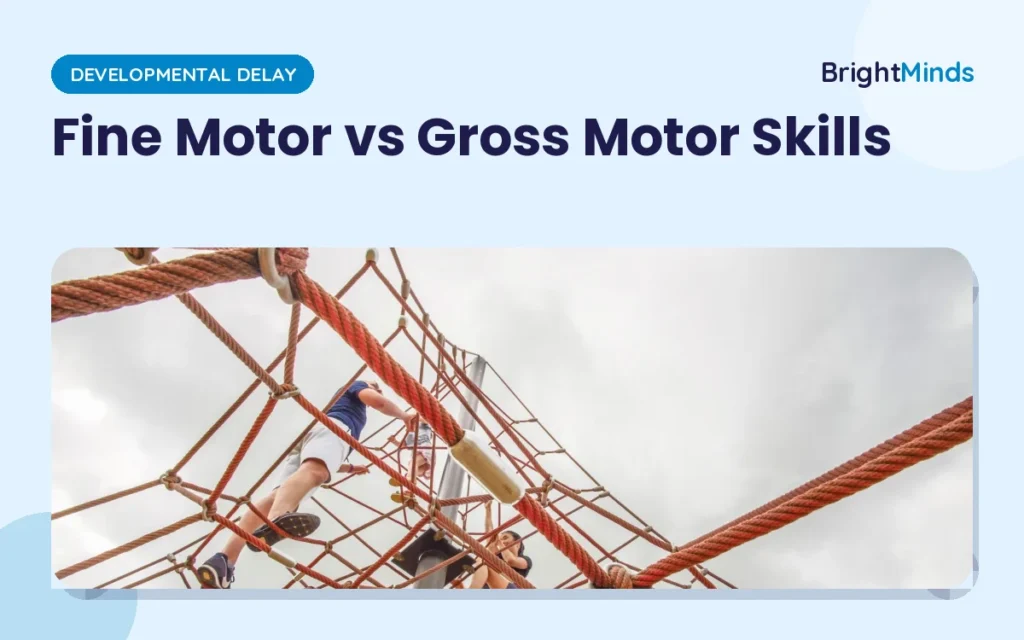
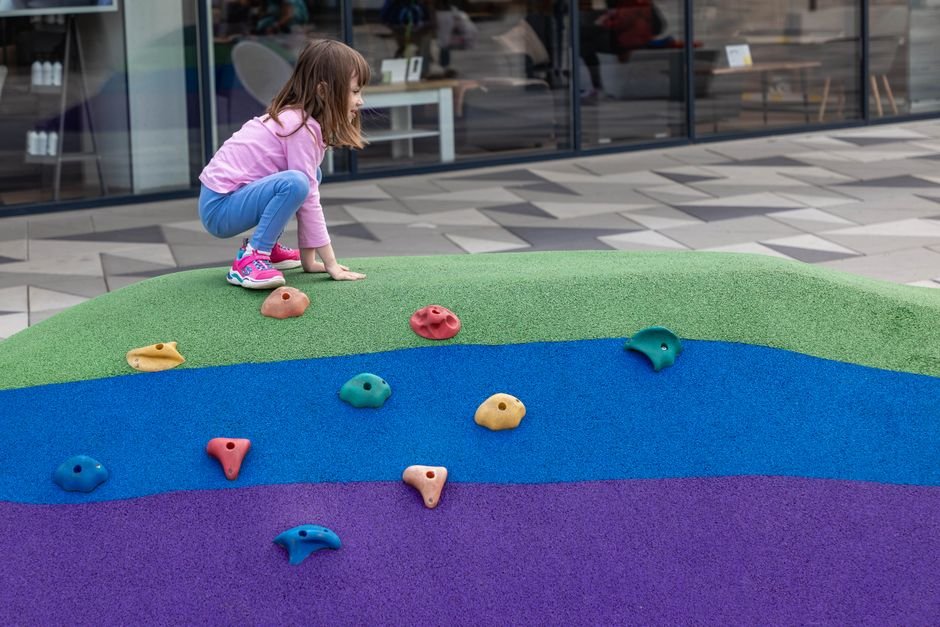
Gross motor skills use the large muscles of the body: arms, legs and trunk.
Examples: sitting up, crawling, walking, running, jumping, climbing stairs, throwing and catching a ball, riding a bike, balancing.
What are fine motor skills?
Fine motor skills use the small muscles of the hands and fingers, working with the eyes.
Examples: picking up small objects, holding a pencil, using scissors, doing up buttons and zips, using cutlery, tapping and swiping on a tablet.
Why both matter
They are connected. Good posture and shoulder stability (gross motor) give the hands a steady base for writing and cutting (fine motor). A child who finds it hard to sit upright may also struggle with handwriting. That is why therapists often work on the whole body, not just the hands.
Signs a child may need support
| Gross motor | Fine motor |
|---|---|
| Frequent tripping or bumping into things | Difficulty holding a pencil or crayon |
| Difficulty with stairs, jumping or balance | Messy or very slow handwriting |
| Tiring quickly in active play | Trouble with buttons, zips or cutlery |
| Avoiding playground equipment | Avoiding drawing, colouring or puzzles |
If you are concerned, talk to your GP or health visitor. A physiotherapist (gross motor) or occupational therapist (fine motor) can assess your child.
Gross motor activities
- Obstacle courses with crawling, climbing and balancing.
- Ball games: rolling, throwing, kicking, catching.
- Animal walks: bear crawls, frog jumps, crab walks.
- Playground time: swings, slides and climbing frames.
- Dancing and action songs.
- Swimming, if available.
Fine motor activities
- Playdough: rolling, squashing, pinching.
- Threading beads or pasta.
- Pegs on a paper plate.
- Stickers and tearing paper.
- Tongs and tweezers games.
- Tapping tiles in tablet games with large targets, such as the free Word Builder and Memory Game.
Our full list of fine motor activities for children with special needs has 14 ideas.
Combine them
Many activities use both: carrying a bucket of water to the garden (gross) and pouring it into a watering can (fine), or crawling through a tunnel to collect puzzle pieces. Combining movement with hand skills keeps it fun.
Free to play, no sign-up
Practise this with a free BrightMinds game
- Word Builder: Hear a word, then tap letter tiles to spell it. Includes a read-to-me button.
- Memory Game: Flip-and-match tiles with a choice of difficulty and theme, and no time pressure.
Frequently Asked Questions
Which develops first, fine or gross motor skills?
Gross motor skills generally develop first. Strength and stability in the body and shoulders support control in the hands.
Who can help with motor skills?
A physiotherapist usually helps with gross motor skills, and an occupational therapist with fine motor skills and everyday tasks.