
Fine-motor skills are the small movements of the hands and fingers we use to hold a pencil, do up buttons, use scissors and tap a screen. Many children with special needs, including those with developmental delay, dyspraxia, cerebral palsy, Down syndrome or autism, need extra practice to build them. These fine motor activities for children with special needs use cheap household items and work at home or in class.
Table of Contents
Why fine-motor skills matter
Strong, coordinated hands make everyday tasks easier and boost independence: feeding, dressing, drawing and writing all depend on them. When fine-motor skills are hard, children may avoid colouring and writing, tire quickly or become frustrated. Regular, playful practice helps build strength, control and confidence.
If your child has an occupational therapist (OT), ask them for current goals. They can suggest the right level and any specific grips to encourage.
Warm-up: build hand strength
1. Playdough
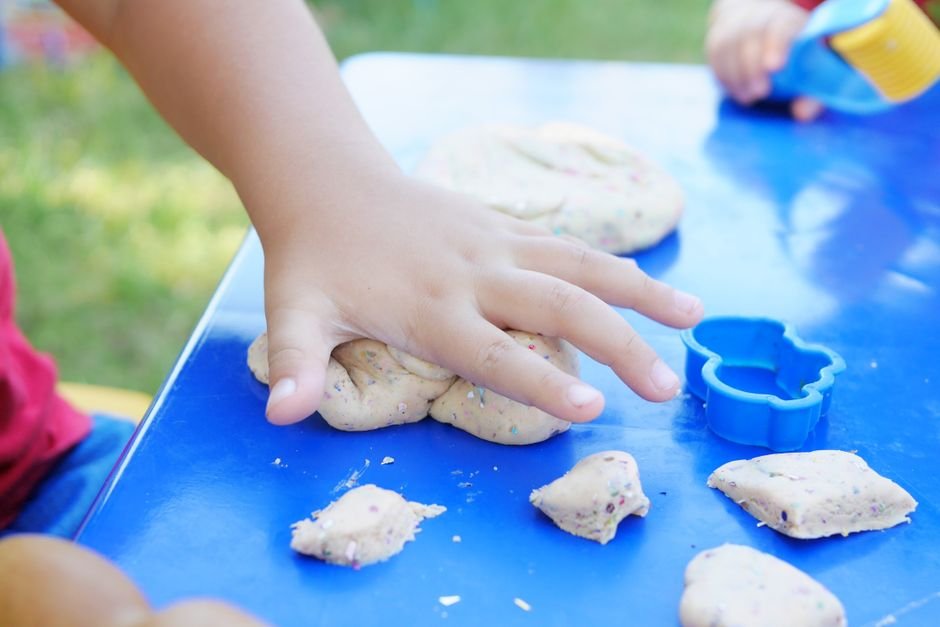
Squeeze, roll, pinch and poke. Hide small beads in the dough for your child to find. Playdough is one of the best all-round hand strengtheners.
2. Squeeze toys
Use stress balls, sponges in water or spray bottles (great for watering plants). Squeezing builds the muscles in the palm.
3. Tearing paper
Tear strips of newspaper or coloured paper to make a collage. Tearing uses both hands together and builds finger strength.
4. Wall push and crawl games
Strength starts at the shoulder. Wall push-ups, crawling through tunnels and wheelbarrow walks all support the stability needed for good hand control.
Pinching and picking up
5. Tweezers and tongs
Move pom-poms, cotton balls or cereal from one bowl to another with tongs or large tweezers. Use bigger items and kitchen tongs to start.
6. Pegs
Clip clothes pegs around the edge of a paper plate or onto a line. Make it a game by matching peg colours to coloured dots.
7. Posting coins
Post coins or buttons through a slot in a box lid. This builds a pincer grasp and wrist control. Supervise closely with small items.
8. Stickers
Peeling and placing stickers is excellent pincer practice. Stick them onto lines or dots for an added challenge.
Two hands together
9. Threading
Thread big beads, pasta tubes or cereal hoops onto a shoelace or pipe cleaner. Start with a stiff lace and large holes.
10. Lacing cards
Punch holes around the edge of a piece of card and thread a lace in and out.
11. Opening and closing
Practise with containers, zips, poppers and buttons. Start with big buttons on a loose garment.
Drawing and early writing
12. Big to small
Start with large movements: painting on an easel, chalk on a wall, drawing in sand or shaving foam. Then move to smaller paper and thinner tools.
13. Short crayons
Broken crayons encourage a finger grip rather than a fist grip. Chunky triangular crayons are easier for some children to hold.
14. Dot-to-dot and mazes
Simple dot-to-dots and wide mazes build pencil control. Start with very few dots and wide paths.
Screen time that builds skills
Tapping and dragging on a tablet is also a fine-motor skill, especially for children who find pencils very hard. Choose games with large targets and no time pressure, so your child can focus on accurate movement. The free Word Builder (tap letter tiles in order) and Memory Game (tap cards) both work well. Balance screen practice with hands-on play.
Tips for success
- Little and often: five to ten minutes a day.
- Check posture: feet flat, table at elbow height, good support for the body.
- Make it purposeful: real jobs like tearing lettuce, peeling stickers onto a chart or watering plants.
- Follow interests: thread “trains” or use dinosaur tweezers.
- Celebrate effort, not neatness.
For more play ideas, read our guide to activities for children with developmental delay, or see free educational tools for cerebral palsy for adapted options.
When to ask for help
If your child finds everyday tasks like feeding or dressing very hard, avoids drawing altogether, or you notice one hand is much weaker, talk to your GP, health visitor or school SENCO about a referral to occupational therapy.
Free to play, no sign-up
Practise this with a free BrightMinds game
- Word Builder: Hear a word, then tap letter tiles to spell it. Includes a read-to-me button.
- Memory Game: Flip-and-match tiles with a choice of difficulty and theme, and no time pressure.
Frequently Asked Questions
What are fine motor skills?
The small, controlled movements of the hands and fingers used for gripping, pinching, buttoning, cutting and writing.
How often should we practise?
Five to ten minutes a day of playful activity is enough.
When should I ask for an OT referral?
If everyday tasks like feeding or dressing are very hard, your child avoids drawing, or one hand seems much weaker.
Sources and further reading
- Royal College of Occupational Therapists: what occupational therapy is and how to access it.
- CDC: Learn the Signs. Act Early.: milestone checklists, including movement and hand skills.