
If your toddler or young child is a late talker, every new word feels like a win. The good news is that everyday moments, like meals, bath time and play, are full of chances to build language. These ways to build vocabulary for late talkers are simple, free and based on the strategies speech and language therapists often teach parents. Use them alongside professional advice, not instead of it.
Table of Contents
What is a late talker?
“Late talker” usually describes a young child (often around 18 months to 3 years) who is using fewer words than expected for their age but is developing well in other ways. Some late talkers catch up on their own; others have an ongoing language difficulty. Because it is hard to tell which, it is always worth asking for advice early.
If you are worried, talk to your health visitor or GP and ask about a hearing test. In many areas, you can also refer your child to a local speech and language therapy service yourself.
The basics: talk less, pause more
It sounds backwards, but one of the most helpful things is to use shorter sentences and longer pauses. Long, fast sentences are hard to pick words out of. Short phrases make the important words stand out, and pauses give your child time to respond.
Ten everyday strategies
1. Get face to face
Get down to your child’s level so they can see your face and mouth. This makes it easier for them to watch how words are made.
2. Follow your child’s lead
Talk about what your child is already looking at or playing with. They are more likely to learn a word when they are interested in the thing it names.
3. Narrate (“sportscasting”)
Describe what your child is doing in short phrases: “Car going. Car fast. Car crash!” You are giving them the words without asking for anything back.
4. Add one word
If your child says one word, repeat it and add one more. Child: “Ball.” You: “Big ball!” Child: “Big ball.” You: “Big red ball!” This gently stretches their language.
5. Offer choices
Hold up two options and name them: “Milk or juice?” Your child can point, look or try the word. Choices give a reason to communicate.
6. Use sabotage (kindly)
Set up small “problems” that invite communication: put a favourite toy in a clear box they cannot open, or give them a bowl without a spoon. Then wait. This creates a natural reason to ask.
7. Repeat, repeat, repeat
Children need to hear a word many times before using it. Reading the same book or singing the same songs again and again is helpful, not boring for them.
8. Sing and use rhymes
Songs with actions (“Wheels on the Bus”, “Row, Row, Row Your Boat”) are predictable, repetitive and fun. Pause before a key word and see if your child fills it in.
9. Use gestures and signs
Pairing words with simple gestures or signs (for “more”, “all done”, “eat”) supports understanding and gives your child another way to communicate. Using signs does not stop children from talking; it often helps.
10. Comment rather than question
Questions like “What’s this?” can feel like a test. Comments (“Wow, a big dog!”) invite communication without pressure.
Choosing first words to model
Focus on useful, everyday words your child can use often:
- People: mum, dad, names of siblings and pets.
- Requests: more, help, open, up.
- Social words: hi, bye, yes, no.
- Actions: go, stop, eat, push.
- Favourite things: ball, car, bubbles, banana.
Books, games and screens
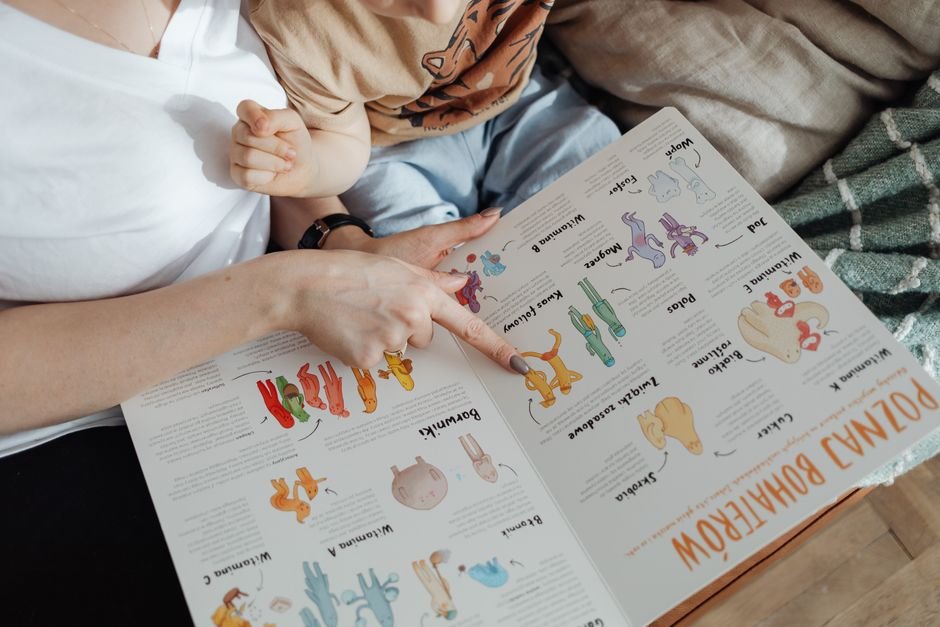
Shared picture books are one of the best ways to build vocabulary. Point to pictures, name them, and wait for your child to point too. Simple picture games can help, as long as you play together and talk about what you see. Try the free Sound Match game to link sounds with pictures, or the picture quiz to name animals, colours and objects.
Screens work best for language when an adult is alongside, talking about what is happening. Background TV, on the other hand, can reduce the amount of talking at home.
Keep it positive
Avoid asking your child to “say it” over and over. Pressure can make children less willing to try. Celebrate any communication, whether a word, sound, sign or point, and keep conversations playful.
For more ideas, read our guides on listening games for speech delay and helping a child with speech delay learn the alphabet.
Free to play, no sign-up
Practise this with a free BrightMinds game
- Sound Match: Listen to a sound and tap the matching picture. Builds listening and phonics skills.
- BrightMinds Quiz: Short picture quizzes on letters, numbers and emotions for ages 3 to 14.
Frequently Asked Questions
Will signing delay my child’s speech?
No. Pairing words with signs or gestures supports understanding and often helps speech develop.
Should I ask my child to repeat words?
Avoid pressure. Model words often and celebrate any communication: a word, sound, sign or point.
When should I seek help?
If you are worried, talk to your health visitor or GP now. Early advice is always worthwhile.
Sources and further reading
- Speech and Language UK: guidance for parents on early talking.
- ASHA: speech and language development milestones and advice.


