
Homework can be the hardest part of the day for a child with ADHD and for the adult sitting next to them. The good news is that a predictable ADHD homework routine takes a lot of the fight out of it. This guide walks through a simple routine you can set up this week: when to start, how to break tasks down, where movement fits in and how to finish without tears.
Table of Contents
- Why homework is so hard with ADHD
- Step 1: Choose the right time
- Step 2: Set up a homework spot
- Step 3: Break the work into small chunks
- Step 4: Make a visible checklist
- Step 5: Build in movement on purpose
- Step 6: Reward quickly and specifically
- Step 7: End the same way every day
- When homework turns into a battle
- Use games for extra practice
- Frequently Asked Questions
- Sources and further reading
- Related reading
Why homework is so hard with ADHD
ADHD affects executive function: the brain skills used to plan, start tasks, hold information in mind and keep going when something is boring. Homework asks for all of these at the end of a long school day, often in a room full of distractions. Difficulty with homework is not laziness. It is a mismatch between the task and how your child’s attention works.
A routine helps because it removes decisions. When homework happens at the same time, in the same place, in the same steps, your child spends less energy getting started and more on the work itself.
Step 1: Choose the right time
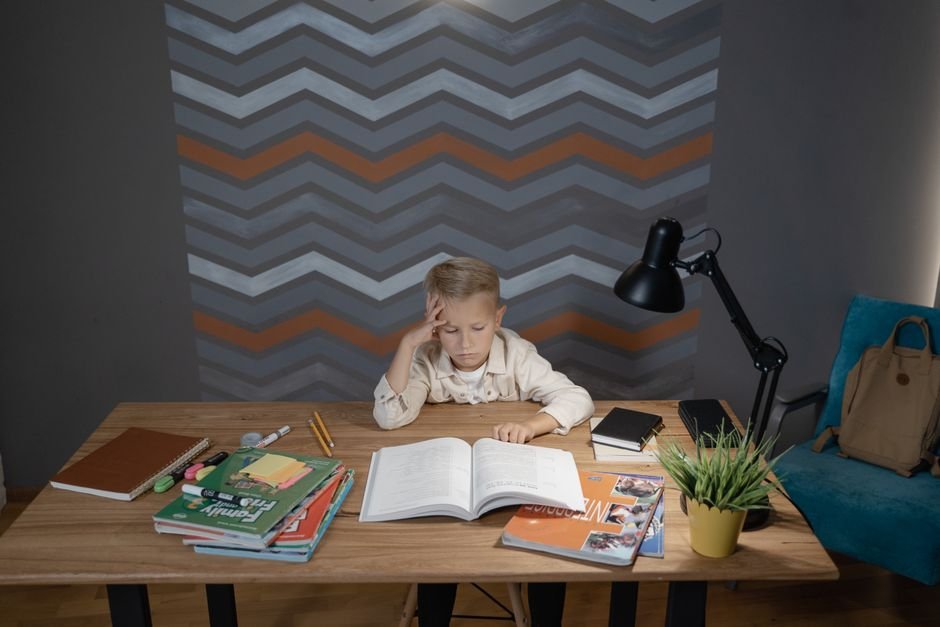
Many children with ADHD need a break between school and homework: a snack, some outdoor play or a run around. Starting the moment they walk in rarely works. Equally, leaving homework until just before bed usually means a tired, frustrated child.
Try a fixed start time about 30 to 60 minutes after getting home, after food and movement, and keep it the same each day. If your child takes medication, ask their doctor about how timing might affect the afternoon, but never adjust medication without medical advice.
Step 2: Set up a homework spot
- Same place every day, ideally away from the TV and away from siblings’ games.
- Clear the table except for what is needed for this task.
- Everything ready: pencils, rubber, ruler and water in a box, so there is no reason to get up and wander off looking for things.
- A visible timer, such as a sand timer or a visual countdown clock, so time feels concrete.
Our guide on how to keep a child with ADHD focused while learning has more ideas for reducing noise and visual clutter.
Step 3: Break the work into small chunks
A worksheet with twenty questions can look like a mountain. Fold it or cover part of it so your child only sees five questions at a time. For reading or writing tasks, agree on one small, clear goal: “Read two pages” or “Write three sentences”.
Work in short bursts with breaks in between. A common pattern is:
- Work for 10 minutes (shorter for younger children).
- Take a 2 to 3 minute movement break: jumping, stretching, fetching a drink.
- Repeat until the chunk list is done.
Time a few sessions to find your child’s natural focus length and plan around it. If 10 minutes is too long, start with 5. Success matters more than duration.
Step 4: Make a visible checklist
Write the tasks for tonight as a short list or use picture cards for younger children. Let your child tick each one off or move it to a “done” pile. Seeing the list get shorter is motivating, and it answers the question “how much more?” without an argument.
Step 5: Build in movement on purpose
Movement is not the enemy of focus for many children with ADHD; it often helps. Try:
- A wobble cushion or a chair with a resistance band around the legs to push against.
- Standing to work at a kitchen counter.
- Spelling practice while bouncing a ball or doing star jumps (one jump per letter).
- Short brain breaks between chunks. See our list of ADHD-friendly ideas.
Step 6: Reward quickly and specifically
Children with ADHD respond best to rewards that come soon after the effort. Praise straight away and be specific: “You finished all five questions without getting up. Brilliant focus.” Small rewards after each chunk (a sticker, a point towards screen time, choosing the next break activity) work better than a big prize at the end of the week.
Try to praise effort rather than speed or correctness. Homework is practice; mistakes are expected.
Step 7: End the same way every day
Finish with a short closing step: pack the bag, put the homework folder by the door and do something enjoyable together. A predictable ending signals that homework is over and gives your child something to look forward to.
When homework turns into a battle
Some evenings will go badly, even with a good routine. If your child is overwhelmed:
- Stop and take a longer break rather than pushing on.
- Do one small piece together so they experience success, then stop for the night.
- Write a short note to the teacher explaining what was managed. Most teachers would rather know than receive a rushed page.
If homework regularly takes much longer than the school expects, talk to the class teacher or SENCO. Reasonable adjustments, such as fewer questions or extra time, are common for children with ADHD.
Use games for extra practice
On nights with no set homework, short learning games keep skills ticking over without a battle. The free Memory Game builds working memory, and the numbers quiz offers five-minute maths practice with no time pressure.
Free to play, no sign-up
Practise this with a free BrightMinds game
- Memory Game: Flip-and-match tiles with a choice of difficulty and theme, and no time pressure.
- Numbers Quiz: Counting and number recognition with pictures, one question at a time.
Frequently Asked Questions
How long should homework take for a child with ADHD?
Follow the school’s guidance and break it into short chunks. If homework regularly takes much longer than expected, talk to the teacher about adjustments.
Should my child do homework straight after school?
Most children with ADHD need a snack and some movement first. Start at a fixed time 30 to 60 minutes after getting home.
What if my child refuses to start?
Make the first step tiny (“write your name”), use a visible timer, and offer a choice of which task to do first.
Sources and further reading
- NHS: ADHD: symptoms, diagnosis and living with ADHD.
- CDC: ADHD: information for families, including school and behaviour support.


