
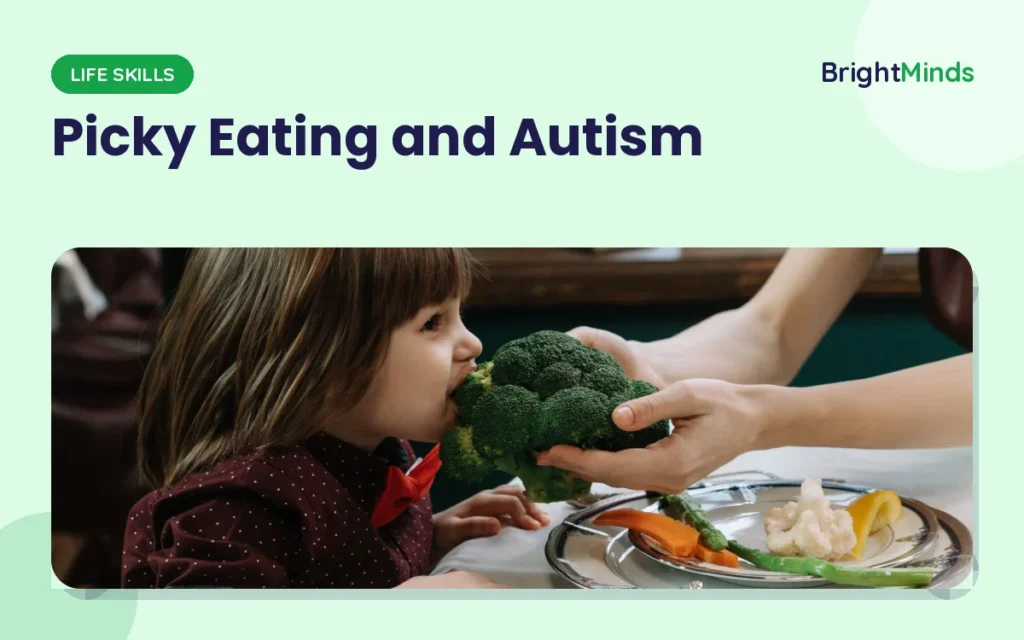
Many autistic children eat a small range of foods, often preferring particular colours, brands, textures or temperatures. This is not simply fussiness. Sensory sensitivity, anxiety about new things and a need for predictability can all play a part. These strategies for picky eating and autism focus on calm, gradual change without pressure.
Table of Contents
Why it happens
- Sensory sensitivity: some textures, smells or tastes feel overwhelming.
- Predictability: familiar foods are reassuring; new ones are unknown.
- Visual differences: a different brand or broken biscuit can seem like a different food.
- Physical factors: reflux, constipation or chewing difficulties can make eating uncomfortable.

Calm strategies that help
Take the pressure off
Pressure (“just one bite”) often increases anxiety and makes children less willing to try. Offer new foods without asking your child to eat them.
Always include a safe food
Put at least one food your child reliably eats on the plate at every meal. They are more likely to sit calmly and explore when they know there is something they can eat.
Use tiny steps
Trying a new food can happen in stages: tolerate it on the table, then on the plate, then touch it, smell it, lick it, and eventually taste it. Each step is progress.
Change one thing at a time
Small changes to a safe food are often easier than completely new foods: a different shape of pasta, a different brand of cracker, or a sauce served on the side.
Make mealtimes predictable
Eat at regular times, in the same place, with the same plate and cup if that helps. A visual schedule can show what happens before and after meals.
Reduce sensory load
Keep the room calm and quiet. Some children prefer foods not to touch each other, so divided plates can help. Let them use their preferred cutlery.
Explore food away from mealtimes
Cooking together, shopping, growing herbs or doing food-based crafts lets children get familiar with new foods without the pressure to eat them. Picture quizzes about food and colours, like the free BrightMinds quiz, can be another low-pressure way to talk about food.
Model eating
Eat a variety of foods yourself, and describe them calmly: “This apple is crunchy and sweet.”
What to avoid
- Hiding foods inside safe foods, which can break trust if discovered.
- Bribes and punishments around food.
- Long battles at the table.
When to ask for help
Talk to your GP if your child is losing weight, not growing as expected, eats very few foods (for example fewer than 15–20), gags or vomits often, or if mealtimes are causing severe distress. They may refer you to a dietitian, speech and language therapist (for swallowing and chewing) or occupational therapist (for sensory needs). Some children have a condition called ARFID (avoidant/restrictive food intake disorder), which needs specialist support.
Free to play, no sign-up
Practise this with a free BrightMinds game
- BrightMinds Quiz: Short picture quizzes on letters, numbers and emotions for ages 3 to 14.
Frequently Asked Questions
Is picky eating common in autistic children?
Yes. Many autistic children eat a limited range of foods, often because of sensory sensitivities or a preference for familiar foods.
When should I worry about my child's eating?
Talk to your GP if your child is losing weight, not growing as expected, eats very few foods, gags or vomits often, or if mealtimes cause severe distress.
Sources and further reading
- National Autistic Society: eating and mealtimes.
- NHS: Autism


