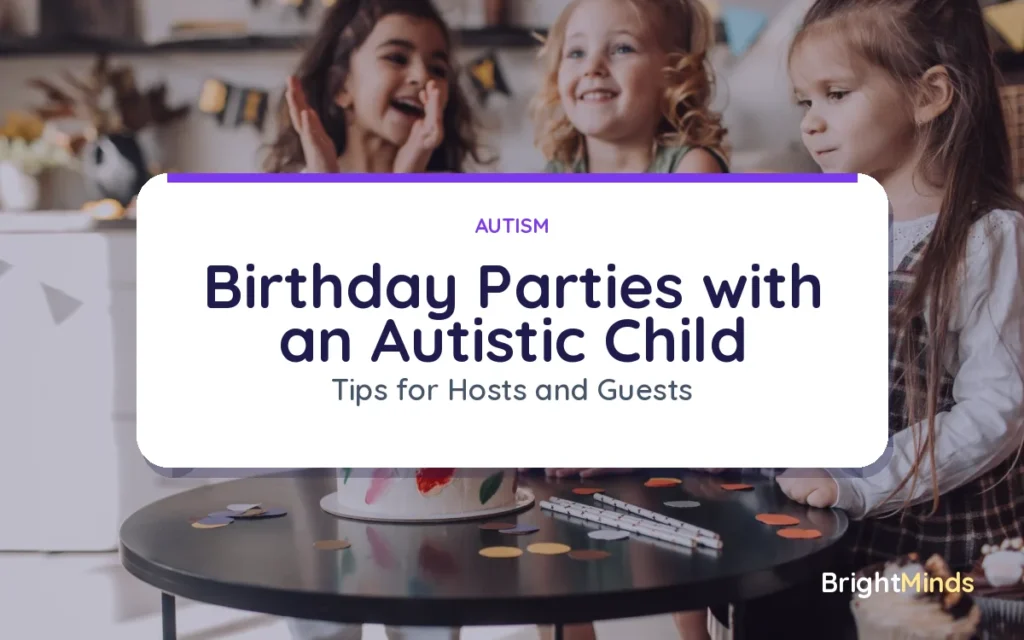
Birthday parties can mean noise, crowds, surprises, unfamiliar food and lots of social demands. For many autistic children, that combination is a lot. But with a little planning, parties can be fun. These tips cover a birthday party for an autistic child, whether you are hosting or your child is a guest.
Table of Contents
If you are hosting
Ask your child what they want
Some children love a party; others would rather have a quiet day with family doing their favourite thing. Both are fine. Let your child help decide.
Keep it small and short
A few familiar friends for an hour or two is often better than a big, long party. Smaller groups are quieter and easier to manage.
Choose a familiar place
Home, a favourite park or a quiet venue your child already knows is usually easier than a busy soft-play centre.
Plan the order and share it
Make a simple picture schedule: friends arrive, play, food, cake, song, presents, friends go home. Show it to your child before and during the party.
Think about the birthday song
Being the centre of attention while everyone sings loudly can be overwhelming. Options: sing quietly, clap instead, let your child wear ear defenders, or skip the song entirely.
Set up a quiet space
Have a calm room or corner with familiar toys, where your child can go when they need a break. Tell them about it in advance.
Presents
Opening presents in front of everyone can be stressful. Your child can open them after guests leave, which also avoids pressure to react in a certain way.
If your child is a guest
- Find out the details: where, who, how long, and what will happen.
- Prepare with pictures or a short social story. See how to write a social story.
- Talk to the host about any needs, such as safe foods or a quiet room.
- Arrive early, before it gets busy, so your child can settle.
- Bring a calm kit: ear defenders, a familiar snack, a small toy.
- Agree a signal your child can use when they need a break.
- Plan to leave early if needed. Leaving on a good note is a success.
Party games that work well
Choose games with clear rules, short turns and no elimination: bubbles, parachute games, treasure hunts, crafts and simple turn-taking games. Avoid games with sudden loud noises or where children are “out”.
After the party
Plan a quiet, low-demand evening. Children often need recovery time after social events. Our guide to calm-down strategies can help if big feelings come out later.
Free to play, no sign-up
Practise this with a free BrightMinds game
- Memory Game: Flip-and-match tiles with a choice of difficulty and theme, and no time pressure.
Frequently Asked Questions
Should my autistic child have a birthday party?
Only if they want one. Some children prefer a quiet day doing a favourite activity with family, which is just as special.
What if my child gets upset during 'Happy Birthday'?
Warn them in advance, let them cover their ears or wear ear defenders, or ask everyone to sing quietly or clap instead.
Sources and further reading
- National Autistic Society: celebrations and social events.