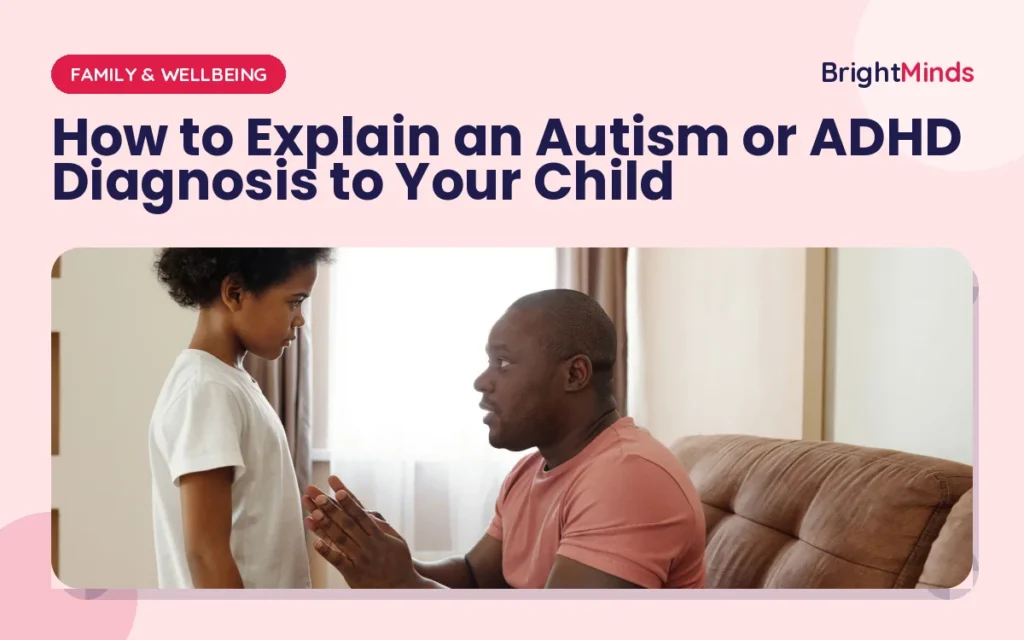
Many parents wonder whether, when and how to tell their child about a diagnosis such as autism, ADHD or dyslexia. Children often already know they are different in some way, and understanding why can be a relief. This guide to explaining a diagnosis to your child focuses on honest, positive conversations suited to their age.
Table of Contents
Why it helps to talk about it
- It gives your child words to understand themselves.
- It can reduce worries like “Why am I bad at this?” or “Is something wrong with me?”
- It helps them ask for what they need.
- It means they hear it first from you, in a loving way, rather than from someone else.

When to tell them
There is no perfect time. Many parents start early with simple explanations and add detail over the years. Good moments are often calm, everyday ones: on a walk, at bedtime, or when your child asks a question about themselves.
What to say, by age
Younger children (around 4–7)
Keep it simple and concrete: “Your brain works in its own special way. It’s really good at remembering facts about trains. Some things, like loud noises, feel extra big for you. That’s okay. Lots of people’s brains work like yours, and it has a name: autism.”
Middle childhood (around 8–11)
Share the name of the diagnosis and talk about strengths and challenges together. Use examples from their own life. “ADHD means your brain finds it harder to stay focused on boring things, and it also makes you full of ideas and energy.”
Older children and teens (12+)
Give more detail and invite them to find out more with you. Talk about famous people, communities and the support they are entitled to. Let them lead how much they want to share with friends.
Tips for the conversation
- Start with strengths. Talk about what they are good at and what makes them them.
- Be honest about challenges, without making them sound like failures.
- Use positive, neutral language. Avoid “suffers from” or “problem”.
- Normalise it. Lots of people share the same diagnosis.
- Invite questions and say it is okay not to know all the answers.
- Revisit it. This is a series of conversations, not one big talk.
Helping them understand their feelings
Your child may feel relieved, confused, upset or indifferent. All are okay. Simple feelings activities help children name how they feel. Try our emotion recognition activities or the free emotions quiz.
Books can help
Children’s books with characters who share their diagnosis can open up conversations. Ask your library or school for recommendations suited to your child’s age and reading level.
Telling others
Talk with your child about who they would like to know: teachers, family, friends. For siblings, see our guide to supporting siblings of children with special needs.
Free to play, no sign-up
Practise this with a free BrightMinds game
- Emotions Quiz: Match faces to feelings in a calm, predictable quiz format.
Frequently Asked Questions
What age should I tell my child about their diagnosis?
There is no single right age. Many parents start simple conversations early and add detail as their child grows and asks questions.
What if my child gets upset?
Listen, acknowledge their feelings and reassure them. It may take several conversations over time for them to understand and feel okay about it.
Sources and further reading
- National Autistic Society: talking about a diagnosis.
- Understood.org: talking to kids about learning and thinking differences.


