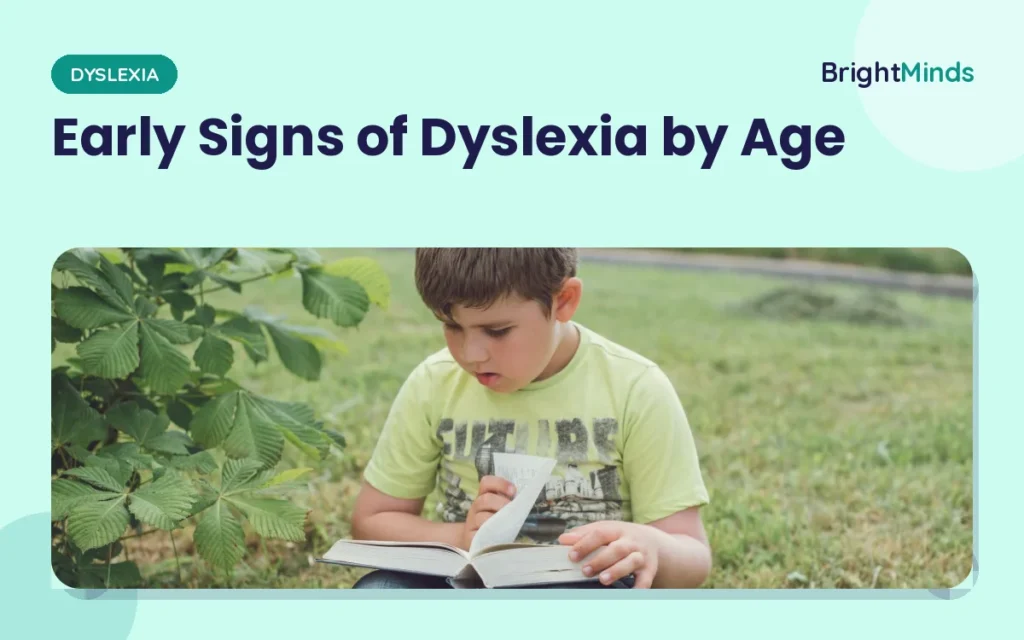
Dyslexia is usually diagnosed once children are at school, but some early signs can show up before then. Knowing the early signs of dyslexia helps parents spot when a child might need extra support with sounds, letters and reading. Remember: one sign on its own does not mean a child has dyslexia, and only a qualified professional can assess it. This guide explains what to watch for at different ages and what to do next.
Table of Contents
- What is dyslexia?
- Possible signs in pre-school children (around ages 3–5)
- Possible signs in early school years (around ages 5–7)
- Possible signs in older children (around ages 7–12)
- Strengths to notice too
- What to do if you notice signs
- How to help at home in the meantime
- Frequently Asked Questions
- Sources and further reading
- Related reading
What is dyslexia?
Dyslexia is a learning difference that mainly affects reading and spelling. It is not linked to intelligence. Children with dyslexia often find it hard to hear and work with the individual sounds in words (phonological processing), to remember sequences, and to process information quickly. It tends to run in families, so if a parent or sibling has dyslexia, it is worth keeping an eye on early language and literacy.

Possible signs in pre-school children (around ages 3–5)
- Late talking, or mixing up the order of sounds in words for longer than expected (for example “pasghetti” well past age 4).
- Difficulty learning nursery rhymes or noticing when words rhyme.
- Trouble remembering the names of everyday objects or colours.
- Little interest in letters, or finding it hard to remember the letters in their own name.
- Difficulty clapping along to a rhythm or the beats in a word.
Many young children do some of these things. What matters is if several appear together and persist.
Possible signs in early school years (around ages 5–7)
- Finding it hard to link letters with their sounds, despite good teaching.
- Slow progress with blending sounds into words (c-a-t to “cat”).
- Guessing words from the first letter or the picture rather than sounding out.
- Reading a word correctly on one page and not recognising it on the next.
- Reversing letters and numbers (b/d, p/q) more often and for longer than classmates.
- Spelling that is very hard to read, or spelling the same word several ways.
- Becoming upset, tired or avoidant at reading time.
Possible signs in older children (around ages 7–12)
- Reading is slow and effortful, even when the child understands the story well when it is read to them.
- Difficulty with spelling, especially longer words, despite lots of practice.
- Written work is much weaker than spoken answers.
- Trouble following a series of instructions or remembering times tables.
- Difficulty copying from the board.
- Low confidence, or saying things like “I’m stupid” about schoolwork.
Strengths to notice too
Many children with dyslexia have real strengths: creative thinking, problem-solving, strong spoken vocabulary, good visual-spatial skills, or a talent for building and making things. Noticing and praising these helps protect self-esteem while reading is hard.
What to do if you notice signs
- Talk to the class teacher. Ask how your child is doing with phonics and reading compared with what is expected, and share what you see at home.
- Ask about extra support. Many schools offer small-group phonics or reading interventions. These help whether or not a child is later diagnosed.
- Ask about screening. The school SENCO may be able to carry out a dyslexia screening or recommend next steps.
- Check eyesight and hearing. Rule out other causes with an eye test and a hearing check.
- Consider a full assessment by a specialist teacher or educational psychologist if difficulties continue.
How to help at home in the meantime
You do not need a diagnosis to start helping. Short, playful practice builds the skills that are hard for children with dyslexia:
- Rhyming games, clapping syllables and “I spy” with sounds. Our guide to phonics games for dyslexia has ten ideas.
- Building simple words with letter tiles or the free Word Builder game.
- Listening for first sounds with Sound Match.
- Reading aloud to your child every day so they keep enjoying stories while their own reading develops.
For a full home plan, read how to support a child with dyslexia at home.
Free to play, no sign-up
Practise this with a free BrightMinds game
- Word Builder: Hear a word, then tap letter tiles to spell it. Includes a read-to-me button.
- Sound Match: Listen to a sound and tap the matching picture. Builds listening and phonics skills.
Frequently Asked Questions
Can dyslexia be diagnosed before school?
It is usually assessed once children have had some reading teaching, but early signs can be spotted sooner and support can start straight away.
Is letter reversal a sign of dyslexia?
Reversing b and d is common in all young children. It is more of a concern if it continues well beyond the early school years alongside other signs.
Who can assess for dyslexia?
A specialist assessor (specialist teacher) or an educational psychologist. Start by talking to your child’s teacher or SENCO.
Sources and further reading
- NHS: Dyslexia: signs, diagnosis and support.
- British Dyslexia Association: guidance for parents on signs and assessment.
- International Dyslexia Association: information on dyslexia across ages.